 Our story

Cool Up Week Jordan - Day 1
Jordan Ministry of Environment Launches its first National Cooling Action Plan
Amman, Jordan — Cool Up Week Jordan opened with a landmark achievement: the official launch of Jordan’s first National Cooling Strategy (NCS) and National Cooling Action Plan (NCAP). With over 100 participants from government, industry, finance, academia and international organisations, day 1 set a strong foundation for the week: high-level engagement, strategic dialogue and a shared commitment to coordinated long-term planning. The NCAP, developed under the leadership of the Ministry of Environment and supported by the Cool Up programme, establishes a pioneering national framework for advancing energy-efficient and climate-friendly cooling.
The launch was officiated by H.E. Dr. Aiman Soleiman, Minister of Environment, marking a significant step forward in Jordan’s climate agenda as cooling demand and emissions continue to rise. Guidehouse, as the lead organisation of Cool Up, and the Royal Scientific Society (RSS), Cool Up’s country partner in Jordan, co-hosted the event alongside the Ministry.
High-level remarks underscore strong national and international support
High-level representatives emphasised the importance of coordinated action and long-term commitment:
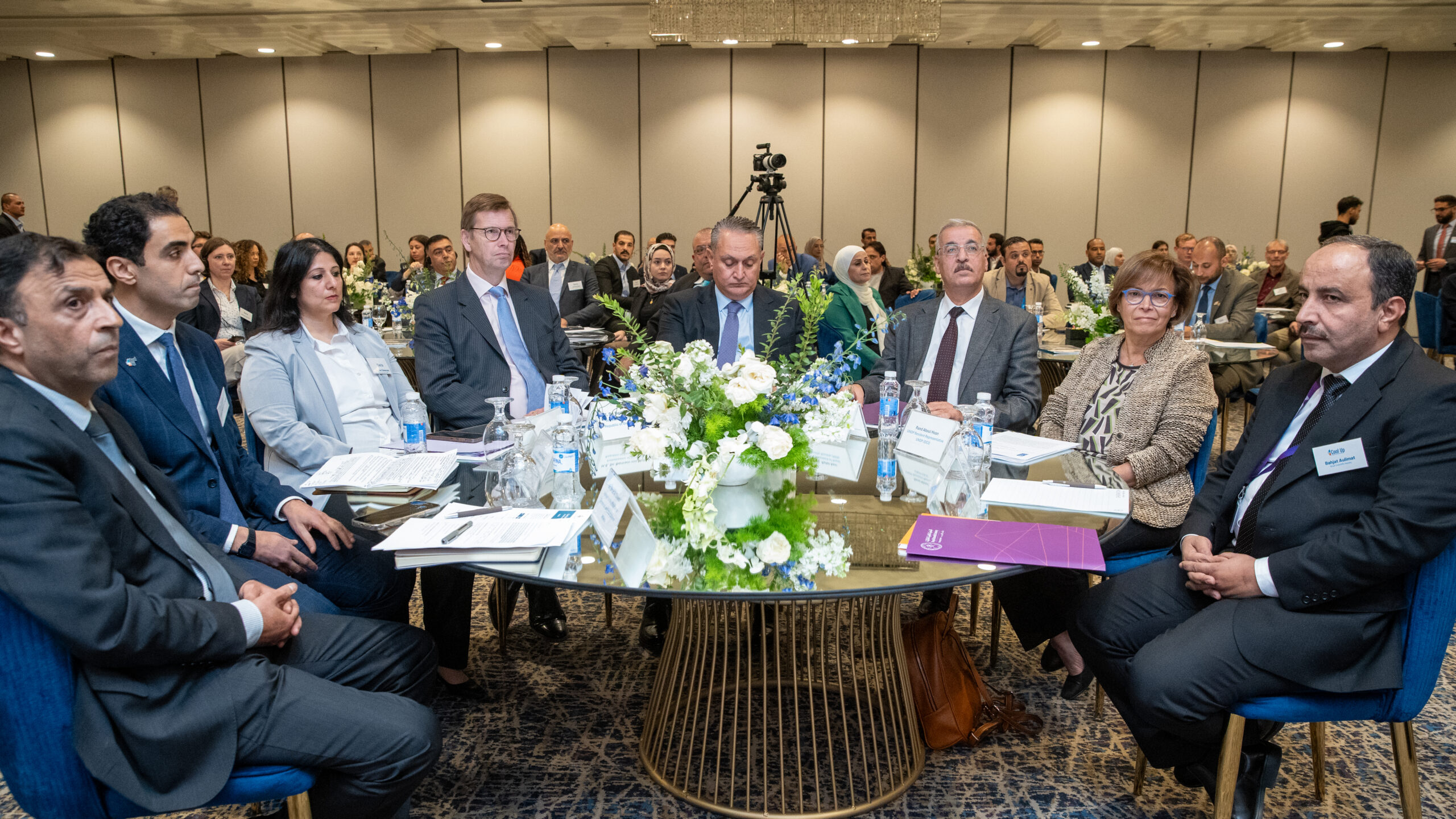
- H.E. Dr. Aiman A. Soleiman, Minister of Environment
- H.E. Dr. Bertram von Moltke, Ambassador of Germany in Jordan
- Eng. Rafat Assi, Vice President, Royal Scientific Society (RSS)
- Ms. Randa Aboul-Hosn, UNDP Resident Representative – UNDP Jordan
Speakers highlighted the NCAP as a crucial tool for reducing emissions, strengthening climate resilience, and guiding investment in sustainable cooling solutions.
Watch this short video capturing key insights, voices and moments from Day 1 of Cool Up Week Jordan
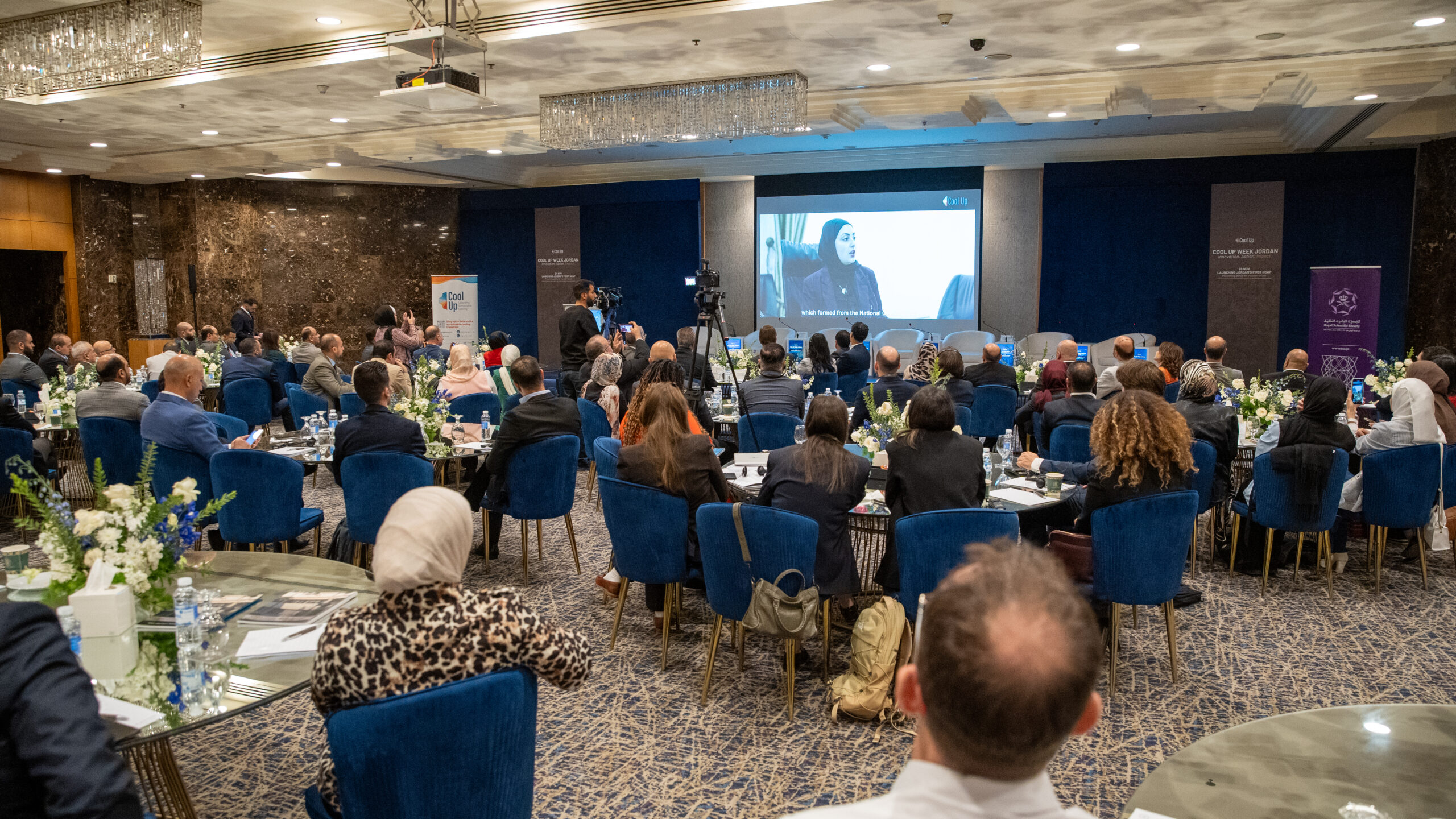
Strategic panel discussions spotlight implementation pathways
Panel 1 — Financing, Implementing and Monitoring the NCAP
Moderated by Eng. Sawsan Bawaresh (RSS / Cool Up Jordan), this session explored enabling frameworks, standards, and institutional coordination needed to operationalise the NCAP.
Panellists:
• Eng. Fadia Al Qadi, Jordan Standards and Metrology Organization (JSMO)
• Eng. Ayman Wreikat, Accreditation and Quality Assurance Commission
• Eng. shorouq Bani Ata,National Ozone Unit (NOU), Jordan
• Eng. Michał Deuszkiewicz , Frankfurt School of Finance & Management / Cool Up
Panel 2 — Advancing NCAPs Across the Region
Moderated by Eslam Mahdy (Guidehouse / Cool Up), this regional dialogue brought together experts from Egypt, Lebanon, Türkiye, and Jordan to exchange experiences and identify shared opportunities for scaling climate-friendly cooling.
Panellists:
• Dr. Ezzat Lewis Agaiby, Head of National Ozone Unit Egypt / EEAA
• Elie Mansour, National Ozone Unit Lebanon
• Dr. Jihad Alsawair , Ministry of Environment Jordan
• Ömer Erdal Bilici , National Ozone Unit Türkiye
• Barbara Gschrey, Öko-Recherche Büro für Umweltforschung und -beratung GmbH / Cool Up
Why the NCAP matters for Jordan
Cooling demand in Jordan is rising rapidly due to economic growth, urbanisation, and increasing temperatures. Conventional cooling technologies are major contributors to energy consumption and greenhouse gas emissions.
The NCAP introduces 30 targeted measures spanning regulatory reform, financing mechanisms, awareness-raising, and capacity building. Together, they form a roadmap for:
- Energy-efficient cooling technologies
- Low-global-warming-potential refrigerants
- Long-term sustainability and climate resilience
- Improved monitoring and cross-sector coordination
Jordan's first National Cooling Action Plan
A strong start to Cool Up Week Jordan
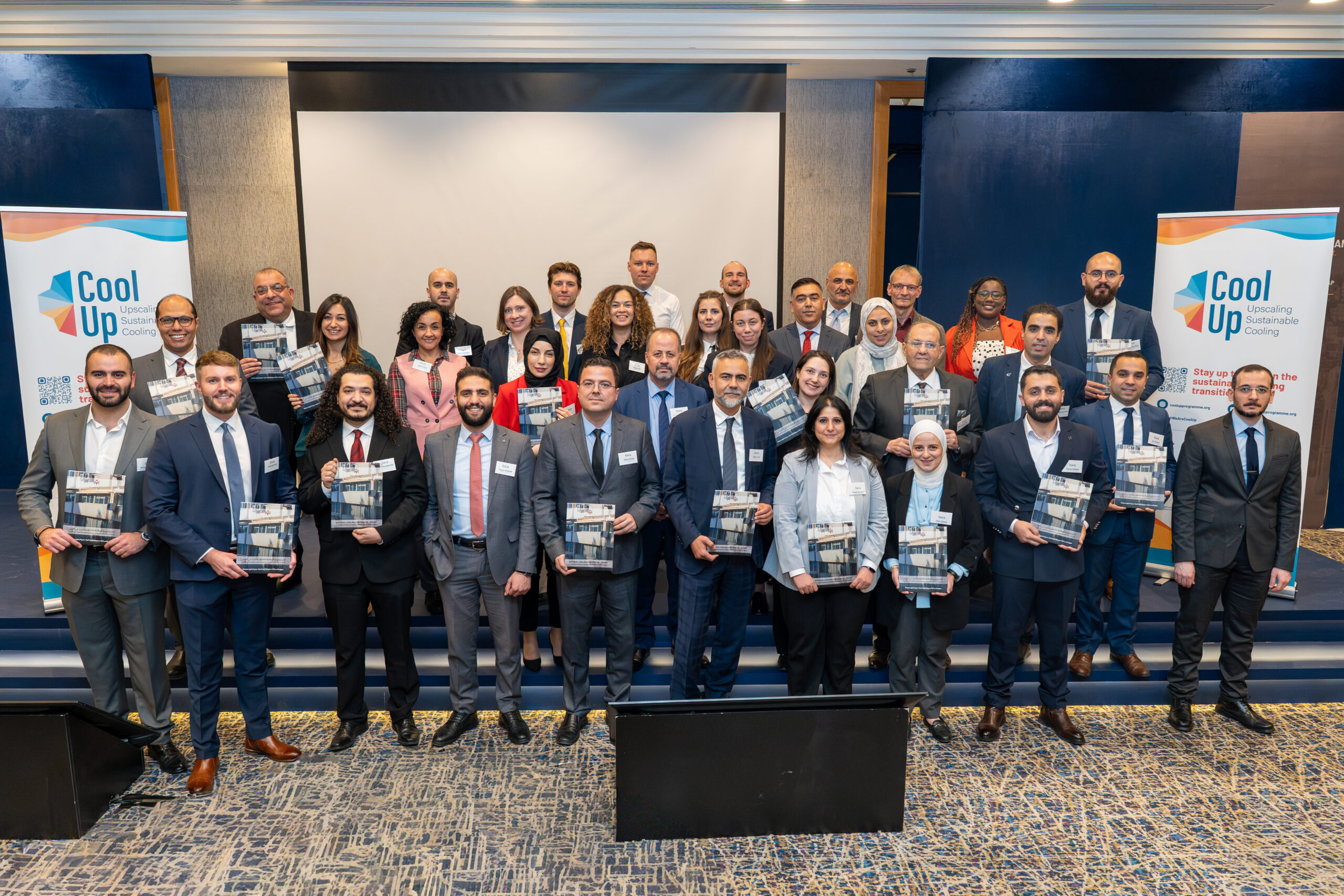
Day 1 of Cool Up Week Jordan concluded with strong engagement from government, industry, finance, academia, and international partners—all united behind the shared mission of advancing sustainable cooling. By providing a coordinated framework with targeted measures, the NCAP equips Jordan to plan for its future cooling needs, guide investment and strengthen national systems. Day 1 demonstrated the strong alignment between national institutions and regional partners in driving this effort forward.
The discussions reaffirmed a central message: progress happens through partnership. With the Ministry of Environment, Cool Up, and a broad network of national and regional stakeholders working in alignment, Jordan is taking decisive steps toward a cooler, more climate-friendly future.